A Chunk the Size of Your Fist Can Change Everything
The Singapore Civil Defence Force data on falling object injuries makes uncomfortable reading for any building manager. Concrete that breaks loose from a facade, a ceiling soffit, or a carpark deck does not announce itself. It falls. Spalling concrete repair Singapore regulations exist partly because of what that fall does to anyone standing beneath it. A 500-gram fragment dropping from the third storey hits the ground with roughly the same kinetic energy as a brick thrown hard by hand. From the tenth storey, the physics are no longer manageable by a hard hat. Building owners who treat spalling as a maintenance annoyance are carrying a liability that no insurance policy fully transfers.
Three Stages of Spalling, Three Different Responses
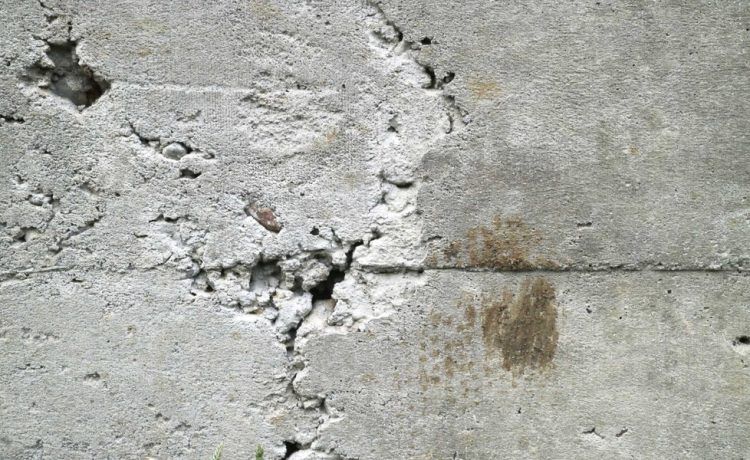
Spalling concrete repair Singapore contractors classify spalling by stage, and the classification drives both the urgency and the repair method. Stage one is incipient: rust staining visible on the surface, hairline cracks running along the line of the rebar, but no concrete has yet separated. The cover concrete is still in place, still providing some protection, but the corrosion mechanism is active. Stage two is active: concrete has fractured and sections are loose, some pieces have already fallen, and the rebar is partially visible. Stage three is advanced: significant concrete loss, rebar heavily corroded, cross-section of the steel visibly reduced, and the structural capacity of the affected element is in question.
Stage one can be addressed with crack injection and a protective coating. Stage three requires a structural engineer before any remediation work begins. Stages two and three are where spalling concrete restoration contractors spend most of their time in Singapore’s ageing building stock.
Why the Concrete Cover Depth Matters More Than the Crack
The single factor that determines how quickly spalling progresses in any given building is the concrete cover depth: the thickness of concrete between the outer surface and the nearest reinforcing bar. Singapore’s building codes specify minimum cover depths based on exposure class, ranging from 25mm for internal elements to 50mm for elements directly exposed to the marine environment. Buildings constructed before the current standards were codified may have cover depths of 15 to 20mm, which is adequate for a decade or so before carbonation and chloride penetration breach the passivation layer at the steel surface. When carbonation front meets rebar, the clock stops counting down and the corrosion clock starts.
Concrete spalling assessment that includes a carbonation depth test, using phenolphthalein indicator solution on a freshly broken surface, tells the inspector exactly how much of the cover depth remains alkaline and how much has already carbonated. That measurement is the best predictor of how far the problem will spread before the next inspection cycle.
The Repair Failures Nobody Advertises
Spalling concrete repair Singapore jobs that fail within two or three years of completion almost always fail for one of four reasons. The repair boundary was not cut to vertical edges: feathered margins have no mechanical key and debond when the repair mortar shrinks slightly during curing. The rebar was wire-brushed but not treated: loose rust was removed but the active corrosion cell was left in place, and the new mortar simply traps the reaction rather than stopping it. The repair mortar was applied too thick in a single pass: mortar shrinks as it cures, and thick applications shrink more, introducing internal stress that cracks the repair from within. The bonding coat was allowed to dry before the repair mortar was applied: a dry bonding coat acts as a release agent rather than an adhesive.
None of these failures are obvious during the repair. All of them are visible two years later.
What Rebar Treatment Actually Requires
Concrete facade spalling remediation done to a standard that holds requires rebar preparation that goes beyond surface brushing. The British Standard BS EN 1504-7, referenced in Singapore’s repair specifications, defines surface preparation grades for reinforcement steel based on the degree of corrosion present. Lightly corroded steel cleaned to Sa 2.5 by abrasive blasting is ready for a zinc-rich epoxy primer that provides both barrier protection and sacrificial cathodic action. Heavily pitted steel that has lost more than 20 percent of its cross-section warrants a structural assessment before any coating is applied, because a primed bar with insufficient remaining section does not become structurally adequate simply because it is no longer corroding.
“Singapore’s infrastructure is a long-term national asset. How we maintain it today determines what the next generation inherits,” Minister for National Development Desmond Lee said when addressing building maintenance standards, capturing a principle that applies to every concrete structure in the country.
The Mortar-to-Substrate Bond: Where Repairs Live or Die
Spalling concrete repair mortar bonds to the parent concrete through a combination of mechanical interlocking with the roughened substrate surface and chemical adhesion through the cement hydration products. The substrate must be saturated surface-dry at the time of mortar application: too dry, and the substrate draws water from the repair mortar, starving the cement of the moisture it needs to hydrate fully; too wet, and the excess surface water dilutes the bonding coat and reduces adhesion. Achieving this condition in Singapore’s unpredictable weather, on an exposed building facade, requires scheduling repairs for the right time of day and having a plan for sudden afternoon rain.
Repair mortar applied in layers not exceeding 20mm per pass, each layer left to achieve initial set before the next is applied, builds up a repair that cures with lower residual shrinkage stress than a single thick application.
Protecting the Repair Against the Next Twenty Years
The repair itself is not the finish line. Spalling concrete repair Singapore work that delivers lasting restoration applies a protective system across the repaired patch and the surrounding facade. A carbonation barrier coating, typically an elastomeric acrylic at a dry film thickness of 200 microns or above, reduces the rate at which carbon dioxide diffuses into the concrete from approximately 0.5mm per year to near zero. Applied across the full facade panel rather than just over the repair patch, it eliminates the differential exposure between repaired and unrepaired areas that would otherwise accelerate the next round of deterioration at the patch boundary.
Spalling concrete repair Singapore buildings depend on is never just about the day the repair is completed. It is about what the building looks like, and how safe it is, ten years after the contractor has left.