Marine plywood has the potential to be used in a variety of situations where it is exposed to high humidity, moist conditions, or water intermittently. Due to its fabrication, bonding, and sculpted qualities, it can be considered in many of the most challenging environments. Nevertheless, one must understand that just because marine plywood may be considered does not mean that it will be appropriate in every circumstance. Learning the advantages of its use can add to the performance of a project.
Where Marine Plywood Should Be Used
Marine plywood is predominantly embraced in environments where it is likely to come into contact with moisture. This quality of fabrication and bonding makes it suitable in situations where untreated plywood would get damaged.
Kitchens and Utility Areas
Kitchen cabinets, sink units, storage spaces, and many more furniture items that have water in proximity will benefit from marine plywood. Such areas are constantly exposed to humidity particles, water splashes, and spills. Using marine plywood in these areas provides significant advantages, provided that the right installation and finishing procedures have been performed.
Bathrooms and Moisture-Prone Interiors
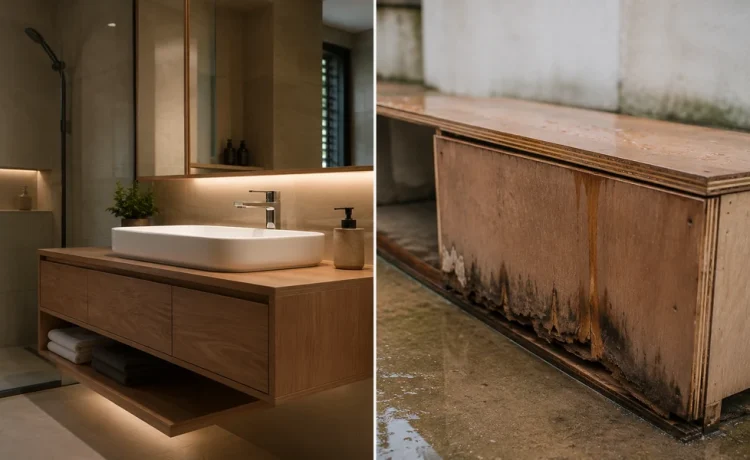
Marine plywood can be used for furniture that can be found in bathrooms, including vanity cabinets, cupboards, and other areas of high humidity. The key is that exposed edges and joints should be sealed properly. Though “waterproof” suggests that plywood glues, finishes, and materials resist exposure completely, it does not mean that a finished piece is safe from prolonged water contact.
Outdoor Furniture and Structures
Marine plywood is a viable option for use in certain outdoor furniture, partitions, panels, and other projects where they will be protected from direct exposure. Due to the moisture-resistant nature of this material, it could be somewhat better than regular plywood when it comes to dealing with the influence of humidity and moisture.
However, the application of proper surface finishing is still crucial in the case of outdoor use, since it does not mean that marine plywood can replace complete weather protection of the installations made from it.
Boats and Water-Related Applications
Marine plywood is often associated with boat crafting and water applications due to the fact that it is made for dealing with harsh moisture conditions. Its possible uses include creating all kinds of components such as panels, interiors, decks, and other structural/non-structural components depending on the specifications.
When making similar projects, plywood must comply with the needed standards.
Where Marine Plywood Shouldn’t Be Used
Despite its benefits, marine plywood cannot be the best option. Using high-grade materials where there is no need to do so would mean more expenses during the project execution.
Indoor Uses in Completely Dry Environments
For furniture, wardrobe compartments, partitions, and other items placed in totally dry environments, marine plywood is not the best option. In this case, good quality plywood for indoor use could do the job perfectly well.
The choice should be made according to expected humidity levels, load, usage, and durability level.
Projects Where Cost Is the Main Consideration
Marine plywood refers to high manufacturing standards and may cost a lot compared to simple plywood if a product is not exposed to moisture in any way.
Applying marine plywood only for the sake of getting high-grade material instead of using lower-grade plywood suitable for the specific application should be avoided.
Applications With Prolonged Direct Water Exposure
Marine plywood is not a product that is totally protected from water. Continuous immersion, standing water, bad sealing between pieces, and prolonged exposure may lead to problems with the plywood in the future anyway.
Proper sealing, finishing, draining, and installation should still be considered when selecting plywood.
Choosing the Right Plywood
Make sure to consider the ways how the plywood would be installed, how much moisture it would be exposed to, and used frequently before making the choice of marine plywood. Check the product grade, thickness, bonding specifications, and standards involved.
Some manufacturers like Royale Touche provide plywood that works for different applications, so comparing the specifications of plywood products will be a better option than selecting any plywood product just because of its name or appearance.
Conclusion
Marine plywood can be a good choice in case of dealing with moisture-prone applications, selected outdoor projects, and other construction projects. However, it should not be used everywhere, and it does not mean that the use of marine plywood implies a lack of protection against continuous exposure to water. Knowledge of the installation environment, conditions, and requirements may help choose the right grade of marine plywood.